
Crystal lovers know the feeling. A stone catches your eye, then you start wondering what it means and how to wear it. Bracelets are the natural place to begin because they dominate the jewelry formats found in our review. We’ll show you how to choose a stone, check the piece, care for it, and use it as a mindful daily cue.
Step 1: Match a Stone to Your Intention
Start with your intention, not a long list of promised healing effects. Healing stone jewelry works best as a personal reminder. You might reach for a stone when you want calm before a busy day, focus during study, or courage before a hard talk. If you want to compare how different stones translate into wearable practices, explore our guide to healing crystal bracelets for energy and balance.
Ask yourself one clear question: “What quality do I want to practice?” That question keeps your choice grounded. It also leaves room for intuition. If one color or texture keeps drawing your eye, pause and notice what it brings up.
Here are common symbolic associations used in crystal practice:
Chakra traditions add another lens. Root stones are often linked with grounding. Sacral stones connect with creativity and feeling. Heart stones point toward compassion, while crown stones are used for spiritual reflection. These are spiritual frameworks, not medical diagnoses. The chakra system has roots in Vedic texts, as explained in this overview of chakras.
At Auras of Osiris, we describe each piece through its stone symbolism while keeping the choice personal. Our handcrafted bracelets make a strong first step for someone who wants a stone close at hand during meditation, yoga, or quiet reflection.
One finding from our review is useful here: bracelets, pendants, and necklaces account for 98% of the entries that named a jewelry type. Rings were rare. That doesn’t make a ring wrong. It simply means a bracelet is the most natural first format for this kind of practice.
Step 2: Choose the Right Jewelry Form and Fit
The best healing stone jewelry is the piece you’ll actually wear. Choose the form based on your daily movements, comfort, and how visible you want the stone to be.
Bracelets
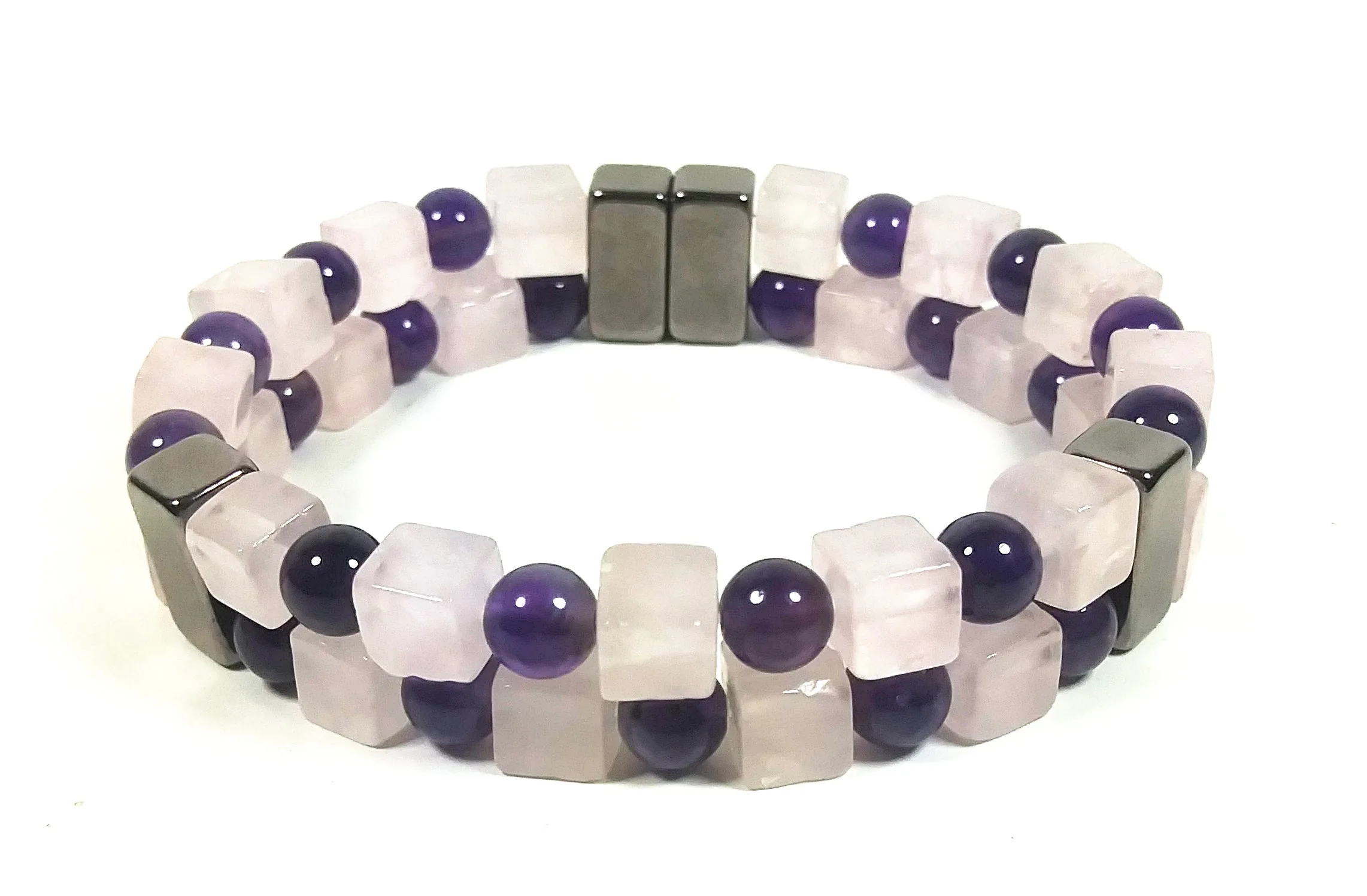
Bracelets keep the stone in view without sitting near your throat or chest. They work well as a small pause point. Each time you notice the beads, take one slow breath and return to your intention.
Look for bead size that feels balanced on your wrist. A larger bead can make a bold style statement, but it may catch on a desk or sleeve. A smaller bead often suits daily wear. Magnetic clasp bracelets can help if fine clasps frustrate you, though magnets still need care.
Necklaces and pendants
A pendant places the stone near the center of your body and can become part of a meditation cue. Adjustable cords help you change the length with different necklines. Check the knot or clasp before wearing it outside the home.
If you like layered jewelry, keep the lengths distinct. Otherwise, chains can rub together and the stones may knock against one another. A simple cord with one focal stone often looks more refined than a crowded stack.
Rings
Rings are easy to see but face more wear. They meet water, soap, desks, bags, and door handles throughout the day. Choose one for short periods if the stone or setting feels delicate.
Measure your finger when your hands feel normal, not after heat or exercise. The ring should stay in place without pinching. For more help with daily wear and fit, our guide to choosing and caring for stone bracelets can help you compare the details before buying.
A good test is simple. Wear the piece at home for an hour. Write, walk, sit, and reach for something. If you keep adjusting it, the fit needs work.
Step 3: Check Authenticity, Craftsmanship, and Responsible Claims
Before you buy healing stone jewelry, inspect the stone and the setting. A pretty photo can’t show every detail. Product descriptions should name the stone clearly and avoid promises that sound like medical treatment.
Review the stone details
Natural stones often show variation. You may see shifts in color, tiny lines, cloudy areas, or differences between beads. That variation can be a sign of nature, not a flaw. Still, ask whether the stone is natural, dyed, coated, lab-grown, or a mix of materials.
Be wary of claims that one bracelet can cure illness, replace a prescription, or fix a serious mental health concern. Crystal traditions can support reflection, but they don’t replace care from a qualified health professional. Separate research from marketing claims: consider the linked research before treating spiritual claims as medical facts.
Inspect the build
- Check whether bead holes look smooth.
- Look for even spacing and secure knots.
- Read the clasp description with care.
- Ask how the piece should be cleaned.
- Look for clear sizing information.
Metal parts matter too. Gold-tone spacers can change the look of a bracelet, while a magnetic clasp may make it easier to put on. Neither detail proves a stone is genuine. Treat design, comfort, and stone identity as separate checks.
Responsible sourcing deserves a direct question. Ask where the stone came from and whether the seller can share any sourcing details. Our review found no ethical-sourcing information in the collected stone entries. That gap means shoppers should ask rather than assume.
Price can offer context, but it can’t prove quality. A high price may reflect labor, design, or a rare material. A low price may reflect a simple setting. Compare the description, materials, fit details, and care advice before you compare the number.
Auras of Osiris focuses on handcrafted crystal and gemstone jewelry with descriptions that explain the stone’s metaphysical associations. Read those details as guidance for a personal practice, not as a promise of a health outcome.
Step 4: Cleanse, Recharge, and Care for Your Stones
Caring for healing stone jewelry has two parts. You protect the physical piece, then you use a cleansing ritual if it feels meaningful to you.
Start with a gentle physical clean
Wipe the stone with a soft, dry cloth after wear. If the seller confirms that water is safe, use a small amount of lukewarm water and dry the piece at once. Keep soap, perfume, lotion, and hair spray away from the stone and metal.
Don’t soak a bracelet just because a cleansing post recommends running water. Some stones can react poorly to water. Porous materials, soft stones, finishes, and glued settings may suffer damage. When you don’t know the stone’s care needs, choose a dry method.
Choose a symbolic cleansing method
Common crystal practices include smoke cleansing with incense or herbs, sound vibration, and placing a stone near selenite. Some people also use running water when the stone can handle it. The goal is a reset in your routine, not a test of worthiness.
A smaller group gave specific methods such as water, smoke, or sound. That difference is a good reason to follow the care directions for your exact piece.
- Set the bracelet on a clean, dry cloth.
- Take three slow breaths.
- Name the intention you want to return to.
- Use sound, smoke, or another safe method that suits the stone.
- Store the piece away from direct sun, heat, and hard objects.
If your jewelry has a magnetic clasp, keep it away from devices or cards that may be affected by magnets. Wipe the clasp dry after wear. Check it for looseness before each outing. A care guide for magnetic jewelry also recommends keeping magnets clean and handling them with care.
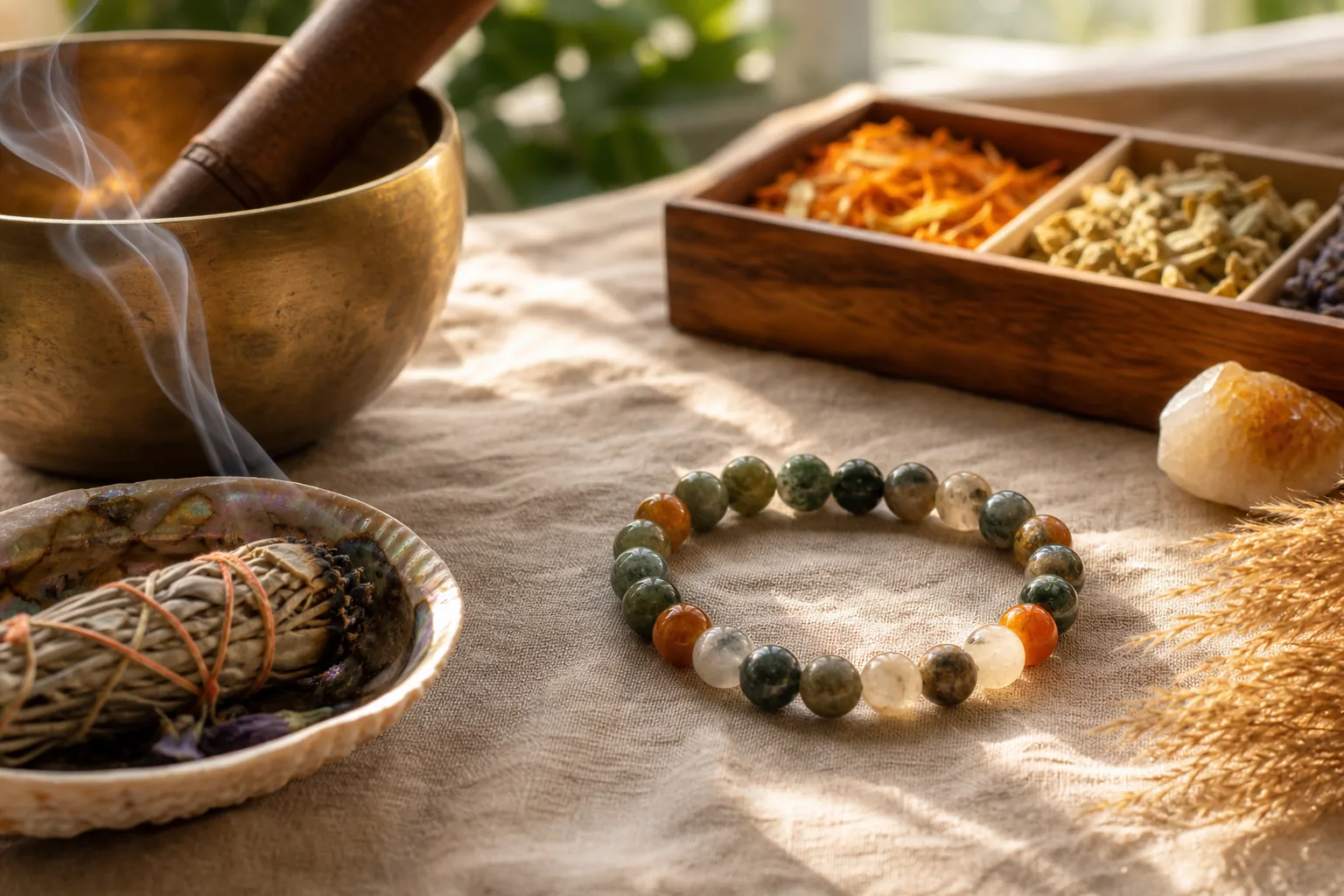
Care doesn’t need to be elaborate. A short reset after a busy week can help you reconnect with why you chose the stone in the first place.
Step 5: Wear and Pair Your Jewelry as a Mindful Practice
Healing stone jewelry becomes more useful when it has a place in your day. Put it on during a morning pause, before meditation, or when you begin work that needs steady focus.
Use one stone first. Wear it for several days and note what you notice. Perhaps the bracelet reminds you to soften your shoulders. Maybe the color helps you pause before reacting. Those small links between the piece and your actions are more dependable than a promise of instant change.
Pair stones by purpose
Pairing can be simple. Clear quartz and amethyst suit a quiet reflection routine. Rose quartz can sit with a stone chosen for calm or emotional balance. Citrine may fit a confidence practice, while a grounding stone can help you return to the body after intense inner work.
There is no universal list of incompatible stones. If a pairing feels visually busy or emotionally distracting, remove one piece. Your practice should feel clear enough to use, not like a test you can fail.
Try this three-minute routine:
- Hold the bracelet or touch one bead.
- Take five slow breaths.
- Say one quality you want to bring into the next hour.
- Choose one action that expresses it.
Breathwork can fit naturally beside this ritual because the breath gives your attention a steady place to land. For readers who want a guided wellness practice, a breathwork resource may complement this ritual.
At Auras of Osiris, we see a bracelet as a wearable prompt. It can point you back to your Higher Self, your breath, or the choice in front of you. You don’t need to wear several pieces at once. One genuine connection is enough.
FAQ
What is healing stone jewelry?
Healing stone jewelry is jewelry made with gemstones or crystals that people use for symbolic, spiritual, or mindful purposes. Wearers may connect stones with qualities such as calm, focus, love, grounding, or confidence. These associations come from crystal traditions. They should support personal reflection, not replace medical treatment or professional mental health care.
Which crystal bracelet is right for me?
The right crystal bracelet is the one that matches your present intention and feels comfortable enough to wear. Choose amethyst for a calm reflection cue, rose quartz for compassion, clear quartz for focus, or a grounding stone for steadiness. If you’re unsure, pick the stone you naturally notice first, then test the fit at home.
How do you cleanse gemstone jewelry?
You can cleanse gemstone jewelry with a soft cloth, sound, smoke, or another method that suits the stone. Use water only after checking that the stone and setting can handle it. Some crystals may weaken, dissolve, or react to moisture. Treat cleansing as a mindful reset, while physical cleaning protects the jewelry itself.
Can crystals really heal you?
Crystals haven’t been shown to replace medical care or cure disease. Many people still use healing stone jewelry as a ritual for meditation, attention, or emotional reflection. That practice may feel supportive when expectations stay realistic. If you have symptoms or a health concern, speak with a qualified professional rather than relying on a stone.
How can I tell if a healing stone is genuine?
You can start by asking whether the stone is natural, treated, dyed, coated, or lab-grown. Look for natural variation and a clear material description. Also inspect the bead holes, clasp, finish, and sizing details. A seller who avoids medical promises and answers sourcing questions clearly gives you better information for a sound purchase.
Choose one stone that reflects the quality you want to practice, then wear it in a way that feels easy and true to you. Explore the handcrafted healing bracelets from Auras of Osiris, and begin with one small ritual you can repeat tomorrow.