

Heart chakra healing begins with a softer kind of strength. You don't need to force love or ignore pain. Use the five steps below to settle your body, ease emotional tension, and reconnect with compassion at your own pace.
Step 1: Create a Grounded Space for Heart Chakra Healing
The first step in heart chakra healing is to make your space feel safe enough for honest feeling. In chakra traditions, the heart center, or Anahata, sits in the middle of the chest and relates to love, connection, compassion, and self-acceptance.
Choose a place where you can sit without being pulled into your phone or other tasks. Keep the light warm. Let fresh air in if that feels good. A folded blanket beneath your hips can help you stay still without straining your back.
Before you begin, place both feet on the floor. Notice the support beneath you. Feel the chair, cushion, or ground holding your weight. This small act brings your attention out of old thoughts and into the body.
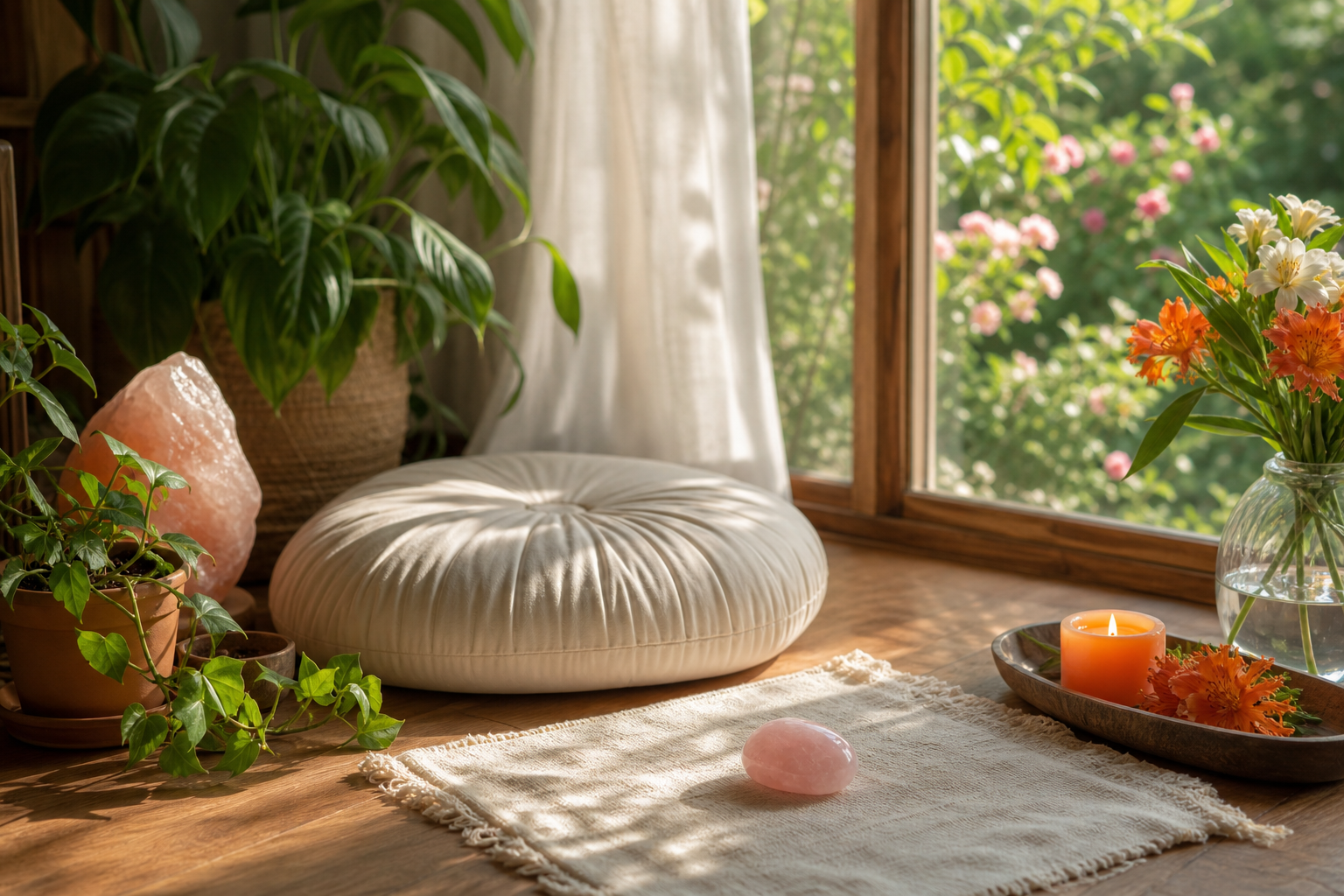
Take a slow look around the room. Name five things you see. Then notice four things you can feel, such as fabric against your skin or the floor beneath your feet. Grounding this way gives your mind a clear task before you turn inward.
Keep the symbolic heart separate from the physical organ. The human heart is a muscular organ that moves blood through the body. Chakra work uses the heart as an energetic and spiritual symbol, so it should never replace care for chest pain, breathing trouble, faintness, or other urgent symptoms.
Set one plain intention. Try, “I am willing to meet myself with care today.” Don't demand a breakthrough. A quiet, steady practice often gives you more room to feel than a dramatic ritual.
Step 2: Use Breathwork to Soften Emotional Tension
Heart chakra healing works best when your breath stays gentle. Breathwork won't erase grief, anger, or fear. It can give your body a calmer rhythm while you make space for those feelings.
Sit tall but don't stiffen your spine. Rest one hand over the center of your chest and the other over your lower ribs. Feel the lower hand move first. This keeps the breath from becoming shallow and forced.
Try a four-six breathing rhythm
Inhale through your nose for four slow counts. Exhale for six. Let the out-breath stay smooth. Repeat for five rounds, then pause and notice the change in your jaw, shoulders, and chest.
If counting makes you tense, drop the count. Breathe in with ease, then let the exhale last a little longer. The goal isn't to reach a perfect number. The goal is to give your body a clear signal that it can soften.
As you breathe, imagine space spreading across the chest. Don't picture a bright light if that feels artificial. You might instead imagine a warm green glow, a quiet garden, or ripples moving across still water. Choose the image that feels believable today.
When emotion rises, name it without building a story around it. Say, “sadness is here,” or “tightness is here.” Then return to the next breath. This practice helps you witness an experience instead of judging yourself for having it.
Stop if you feel dizzy, panicked, or short of breath. Return to normal breathing and place your feet firmly on the floor. Anyone with a health concern should ask a qualified clinician before starting a new breath practice.
For a yoga-based version, you can pair this rhythm with a gentle chest-opening pose. Keep the movement small. A pose should support your breath, not make you push through pain.
After five minutes, write one sentence: “My body feels...” Don't search for the right answer. A word such as heavy, warm, restless, or calm is enough.
Step 3: Practice Heart-Centered Meditation and Visualization
Heart chakra healing becomes more personal when meditation includes both compassion and clear boundaries. Opening your heart doesn't mean saying yes to everyone. It means meeting yourself with honesty while choosing how you share your care.
Use a simple ripple practice
Close your eyes or soften your gaze. Bring attention to the center of your chest. Picture a small circle of warm light there. Let it expand with each easy breath, but keep it close to your body at first.
On the next breath, imagine the circle reaching your shoulders and upper back. Then let it spread around your whole body like a calm field. You aren't sending energy to anyone. You're learning what it feels like to stay present with yourself.
Now bring one supportive phrase to mind. “May I be kind to myself while I heal” works well. Repeat it slowly. If the words feel too strong, change them to “I am willing to practice kindness toward myself.”
Next, picture the ripple moving toward one person you trust. Keep the image light. You don't need to fix them or carry their pain. Simply recognize the connection, then let the ripple return to your own chest.
This return matters. Many people confuse compassion with overgiving. A healthy heart practice includes a center point. You can care about someone and still say no. You can forgive someone without inviting them back into your life.
End the meditation by noticing three physical points of contact. Feel your feet. Feel your seat. Hear one sound in the room. Open your eyes when you feel ready.
If you practice with a crystal bracelet, place it beside your cushion rather than treating it as a cure. At Auras of Osiris, we frame crystal jewelry as a ritual reminder. The meaning comes from the attention you bring to the practice.
Try this meditation for five to ten minutes. Short sessions are easier to repeat, and repeat practice gives you more useful feedback than one long session followed by weeks away.
Step 4: Add Heart Chakra Affirmations and Reflective Journaling
Affirmations can support heart chakra healing when they sound close enough to your truth. A sentence that feels false may create more resistance. Choose words that invite practice rather than demand instant belief.
Choose an affirmation you can live out
- I can care for myself without earning rest.
- My feelings deserve patient attention.
- I can give love without abandoning my own needs.
- I am allowed to receive support.
- I can set a kind, clear boundary.
Say one phrase three times. Then ask, “What would this look like today?” If you choose “I am allowed to receive support,” the answer might be replying to a kind message instead of dismissing it. It might mean asking for help with one small task.
Journaling takes the idea out of your head and puts it into a choice. Write for ten minutes without editing. Start with one of these prompts:
- What am I still asking myself to prove?
- Where do I confuse self-protection with self-punishment?
- What do I need to forgive myself for misunderstanding?
- What boundary would make care feel safer?
Self-love is often the hidden blocker. People may want to send compassion outward while speaking to themselves with harsh words. Notice that split. Write down the sentence you use against yourself, then rewrite it as something firm but humane.
For example, replace “I always ruin relationships” with “I made choices I regret, and I can learn a different way to respond.” The second sentence doesn't deny harm. It leaves room for repair.
Shadow work needs care. Don't force yourself to relive trauma alone. If journaling brings up memories that feel unsafe or unmanageable, pause and seek support from a licensed mental health professional.
End each entry with one small act. Drink water. Take a walk. Send a clear message. Rest without guilt. Heart-centered work becomes steady when it changes a choice in daily life.
Step 5: Choose and Care for a Heart-Centered Crystal
A heart-centered crystal can give your practice a visual and tactile focus. It can't diagnose an imbalance or heal a medical condition. Think of it as a reminder to return to your breath, your values, and your own inner care.
Rose quartz is a common choice for rituals tied to love and emotional balance. Green stones can appeal to people who connect the heart center with nature, renewal, and growth. The best choice is the one whose color, shape, and meaning help you return to your intention.
Auras of Osiris has a Rose Quartz Heart Bracelet with a magnetic clasp and a 10mm focal bead. Its wearable form can make a short pause easier to remember during a busy day. Wear it during meditation if it feels comfortable, or keep it near your journal as a quiet ritual cue.

Clean and store your stone with care
Start by checking the care guidance for your specific stone. Avoid soaking any crystal when you don't know how it reacts to water. A dry, soft cloth is a safer first choice for removing dust from a polished piece.
Keep jewelry away from harsh sprays, perfume, and rough surfaces. Store it in a soft pouch or a separate dish so the stone and clasp don't scrape against other pieces.
You can also cleanse the ritual by changing your own attention. Set the stone down, take five slow breaths, and name what you want to practice next. This works because the ritual points your mind toward a chosen action. The stone doesn't need to do the work for you.
Our crystal bracelet care and aura-cleansing notes include simple placement ideas for meditation. If you wear a bracelet during yoga, keep it secure and remove it when a pose puts pressure on your wrist.
Yoga can add movement to this work. A movement studio may offer classes in Lagree, yoga, Pilates, barre, HIIT, and infrared sauna. If you attend a class, let the bracelet remain a personal reminder, not a claim about what the class or stone can medically do.
Choose one crystal and use it for a week before buying more. Notice whether it helps you pause, breathe, or remember a boundary. That is a better measure than chasing a perfect stone.
FAQ
What is the heart chakra?
The heart chakra is the fourth chakra in many South Asian chakra systems, often called Anahata. Practitioners connect it with love, compassion, connection, grief, and self-acceptance. In heart chakra healing, the focus is symbolic and spiritual. It isn't the same as treating the physical heart or a diagnosed health condition.
How do I know if my heart chakra is blocked?
People often describe a blocked heart chakra as difficulty receiving love, harsh self-talk, guardedness, grief, or trouble setting balanced boundaries. These signs aren't medical diagnoses. Use them as reflection prompts, then look at the daily pattern behind them. If distress lasts or affects your life, consider support from a qualified professional.
What is the best crystal for heart chakra healing?
Rose quartz is a popular choice for heart-focused rituals because many practitioners link it with love and emotional balance. Green stones may also appeal to people who connect the heart center with growth. The crystal is a personal symbol, not a treatment. Choose one you enjoy holding and pair it with breath or reflection.
Can heart chakra healing help with emotional pain?
Heart chakra healing may give you a gentle structure for noticing emotional pain and responding with more care. Breathwork, journaling, and meditation can support self-reflection. They don't replace therapy or medical care. Stop any practice that makes you feel overwhelmed, and seek qualified help when pain feels too large to hold alone.
How long does heart chakra healing take?
There is no fixed timeline for this work. A five-minute daily practice may help you build awareness, while deeper grief or relationship wounds may need longer support. Track small changes, such as pausing before self-criticism or stating one clear need. Consistency matters more than a dramatic feeling during one session.
Conclusion
Start with a grounded seat, then add five calm breaths and one honest journal line. Keep the practice small enough to repeat. If a crystal helps you remember that pause, choose a piece that feels meaningful and comfortable, such as the Rose Quartz Heart Bracelet from Auras of Osiris. Let the stone point you back to your own care, where the real practice takes place.