

Your crystals soak up energy from everything around them. Over time they go dull, heavy, and a little flat. Charging brings their energy back to full strength so they can support your meditation, healing, or daily intentions. Here are 7 powerful ways to charge crystals, what each one is best for, and the honest caveats so you don't fade a favorite stone.
1. Auras of Osiris (Our Top Pick)
Auras of Osiris is an online boutique for handcrafted crystal and gemstone jewelry, each piece described with its stone's healing and metaphysical properties. Best for: people who want a charged, ready-to-wear crystal without sourcing loose stones and learning every care rule first.
Here's why we put it first. Charging works best when you start with a genuine, well-cut stone, and the bracelets and necklaces here are made with that in mind. The pieces come with clear notes on each stone's energy, so you already know whether your crystal loves the sun or fades in it. That saves you a guess later.
You can also pair a piece with the founder's book, "The Lost Art of Manifestation," if you want a deeper intention practice to go with your jewelry. A simple Rose Quartz sphere makes a gentle starter stone for moonlight charging and heart-centered work.
The honest caveat: jewelry stones are small, so a giant sun bath isn't your method here. Quick moonlight rests, sound, and breathwork suit worn crystals far better, since they protect the polish and color while you keep the stone close.
According to Wikipedia's entry on rose quartz, the stone is a pink variety of quartz colored by trace minerals, which is part of why it holds up so well to gentle, regular care.
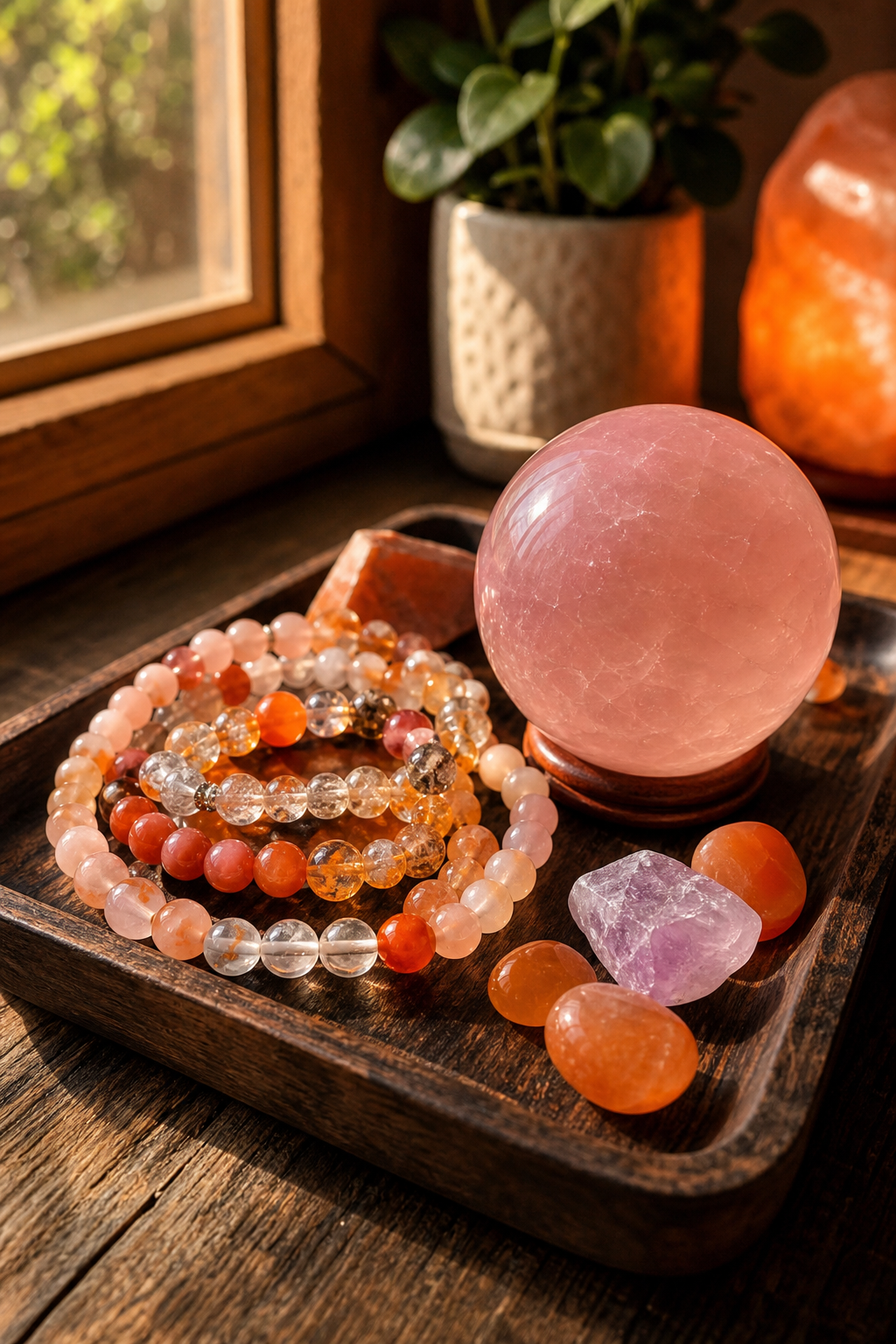
2. Sunlight Charging, Bold Energy for Solar Stones
Sunlight charges crystals by saturating them with warm, active energy that clears stale vibrations and restores vitality. Best for: hardy, confident stones like clear quartz, citrine, and tiger's eye.
Set your stone in direct sun for about one to three hours, then bring it back inside. Early morning or late afternoon light is gentler and far less likely to overheat the stone, so those windows are the safe bet for most crystals. If you're charging several at once, space them so they don't shadow each other.
Set an intention while you place them. A clear focus, like clarity or confidence, helps you connect with the stone's energy as it charges. Citrine and tiger's eye line up naturally with strength and self-assurance, which is why they take so well to solar charging. A citrine necklace is a good example of a sun-friendly stone you can wear daily.
The big caveat: many colored stones fade in strong sun. A guide from Crystals Healing UK notes that UV light disrupts the color centers in stones like amethyst and rose quartz, and that fading is permanent. Keep those out of strong sun.
3. Earth Burial, Grounding Stones Back to Their Source
Earth burial charges a crystal by returning it to the soil it formed in, where it absorbs grounding, stabilizing energy. Best for: grounding stones like black tourmaline, smoky quartz, and hematite, or any stone that needs a deep reset.
Bury your crystal in your garden or a plant pot and leave it for at least 24 hours, up to 48 for a deeper charge. The earth's energy revitalizes the stone and pulls off stored negativity. When the time's up, dig it out and brush off the soil.
If you'd rather not dirty the stone, put it in a small container first, then bury that. The charge still comes through. Mark the spot too, especially with small pieces, because tiny tumbled stones vanish into dirt fast.
Don't have outdoor space? A bowl of uncooked rice works as a gentle stand-in. Bury the crystal in the rice overnight and the grains draw off unwanted energy, then toss the rice afterward. The Rock Paradise charging guide recommends earth burial specifically for grounding stones that need a stabilizing cleanse.
One caution: make sure the soil is free of harsh chemicals or fertilizers that could pit or stain a porous stone. And keep water-sensitive crystals out of damp ground for long stretches.
4. Sound & Vibration, Charging With Singing Bowls and Chimes
Sound charges crystals with vibration. The sound waves move through the stone's structure, shake loose stuck energy, and reset it to a fresh frequency. Best for: large collections, clusters, and delicate stones you don't want to touch or wet.
Use a Tibetan singing bowl, a tuning fork, or chimes. Lay your crystals around the bowl on a soft surface, never inside it, because the strong vibration can crack delicate pieces like selenite or thin jewelry. Strike the rim for one clear tone, then circle the mallet slowly and steadily to build the sound.
Play for one to two minutes and let the tone wash over the stones. Smaller bowls make higher tones that suit small crystals, while larger bowls make deeper tones for bigger pieces. As the sound resonates, picture heavy energy lifting away and the stones glowing brighter.
This is the easiest way to charge a whole shelf at once, which is why it's a favorite for people with growing collections. If you're someone who wears your stones daily and wants gentle upkeep without fuss, a quick sound bath fits right into a calm morning. For readers who pair crystal work with a wider positivity practice, a mindset blog like Pensée Positive offers a complementary take on keeping your daily energy bright.
The caveat here is small but real: very delicate or already-cracked stones can stress under strong vibration, so keep the bowl a little farther from those and play softly.
5. Crystal Clusters & Selenite, Charging Stone on Stone
Selenite charges other crystals just by sitting near them. Unlike most stones, selenite doesn't store the energy it picks up. It clears and resets the energy around it, working almost like a tuning fork for your collection. Best for: anyone who wants low-effort, daily charging without sun, water, or ritual.
Lay your stones on a selenite slab or charging plate, drop small tumbled pieces into a selenite bowl, or sweep a selenite wand over a crystal to release what it's holding. A slab handles a whole set at once, which makes it handy for a crystal grid or a tray of bracelets.
Selenite is a soft form of gypsum and ranks low on the Mohs hardness scale, so it's delicate. The name comes from the Greek word for moon, which fits its luminous, calming quality. Wikipedia's entry on selenite notes it's a crystalline variety of gypsum, calcium sulfate, which is exactly why you keep it dry.
Clusters and geodes of clear quartz or amethyst work in a similar way. Set a smaller stone on a quartz cluster overnight and the points help recharge it. A piece that blends stones, like this Amethyst and Malachite necklace, can rest on a selenite plate for a safe overnight charge that won't fade the color.
The caveat: keep selenite away from water entirely, since it can flake or dissolve. And because it's soft, store it apart from harder stones that could scratch it.
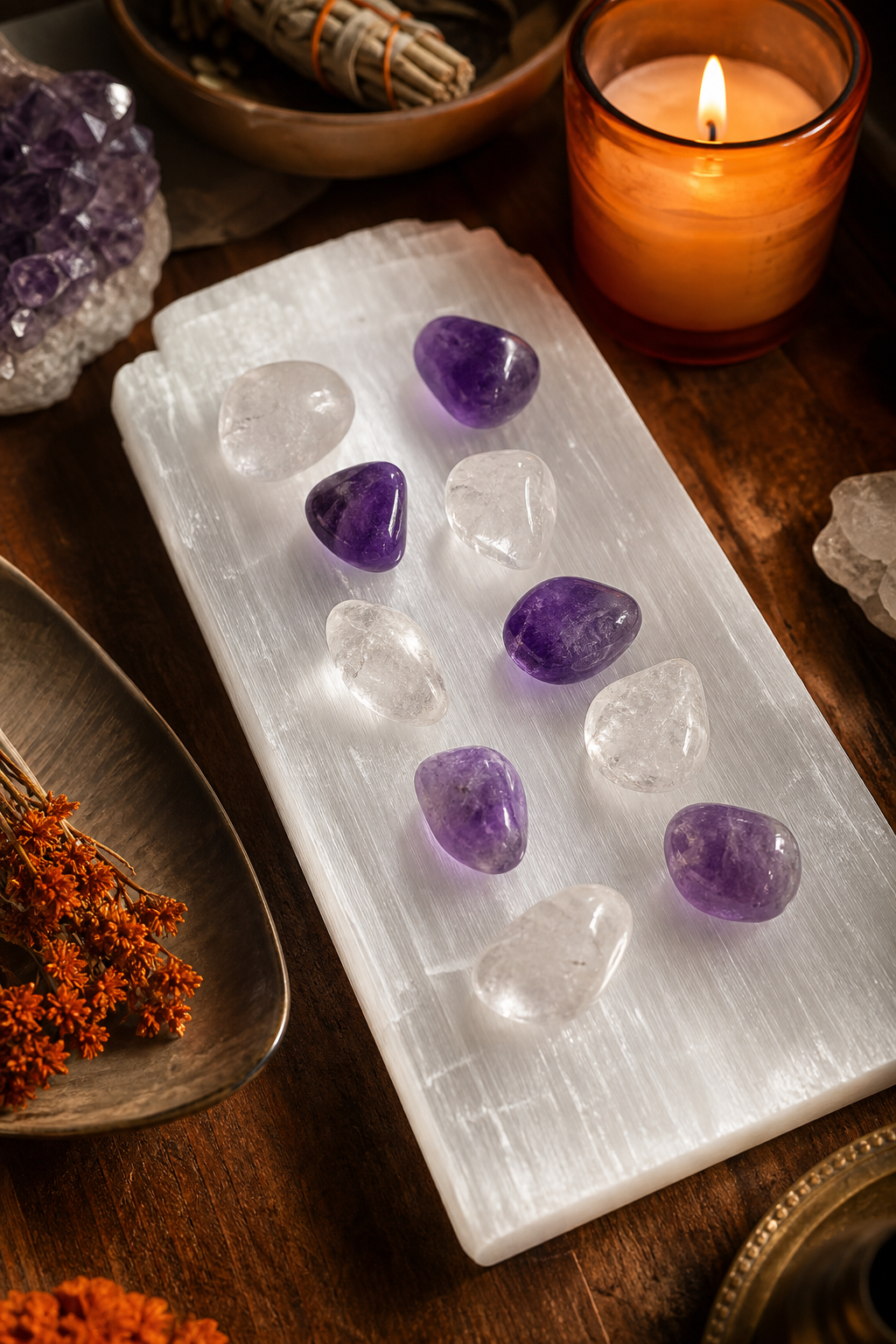
6. Intention & Breathwork, Charging With Your Own Mana
Intention and breathwork charge a crystal with your own life force, your mana. You hold the stone, breathe with focus, and direct positive energy into it. Best for: stones you use in meditation or manifestation, and anyone who wants a method that needs zero tools.
Here's the simple version. Hold a small crystal in your hand and exhale in steady bursts over it for about 30 seconds, picturing stale energy leaving. Then breathe in and imagine fresh, positive energy filling the stone. As gem specialist Isabela Gomez puts it in a breathwork with crystals guide, you hold the crystal, exhale negative energy, then inhale and visualize positive energy entering it.
To go further, set an intention out loud. Hold the stone in your non-dominant hand, your receiving hand, and say something clear like "I am grounded" or "I release tension." Spend a minute on the weight and texture of the stone. This is sometimes called programming a crystal: clearing it, naming a purpose, then focusing that purpose into the stone.
Box breathing pairs well with a beaded bracelet. Press your thumb to one bead as you inhale for four counts, hold for four, exhale for four, pause for four, then move to the next bead. The beads keep you on rhythm.
This method has no caveat about damage, since nothing touches the stone but your breath. The only catch is that it asks for your attention. Rushed breathwork doesn't do much, so give it a few quiet minutes.
7. Which Charging Method Fits Your Crystal, A Quick Reference
Not every method suits every stone. The fastest way to choose is to check whether your crystal handles sun, water, and strong vibration. Soft and pale stones need the gentlest options. Hard, dark stones can take almost anything.
Use this table to match the stone to a safe charging method before you start.
The simple rule: if you're ever unsure, choose moonlight or selenite. Both are safe for every stone and won't fade color or risk cracks. Save sunlight and water for the hardy, sun-loving stones only. A labradorite necklace, for instance, holds its color well and does fine with a gentle overnight charge rather than harsh sun.
Frequently Asked Questions
How often should I charge my crystals?
Charge your crystals about once a month, ideally near the full moon, and after any intense use. If you use a stone daily in healing or meditation, or it feels heavy and dull in your hand, that's your sign to charge it sooner. Stones that sit unused for months also benefit from a fresh charge before you work with them again.
What's the difference between cleansing and charging crystals?
Cleansing clears away stale, negative energy and resets a crystal to its pure state, while charging refills its energy so it works at full strength. Think of cleansing as wiping the slate clean and charging as plugging the stone back in. Many methods, like moonlight, sound, and selenite, do both at once, which is why they're so popular.
Can all crystals be charged in sunlight?
No, not all crystals can handle direct sunlight. Hardy stones like clear quartz, citrine, and tiger's eye love the sun, but pale colored stones such as amethyst, rose quartz, fluorite, and aquamarine fade permanently in strong UV light. When in doubt, charge a colored stone in moonlight or on selenite instead, since neither carries UV or heat that damages color.
Do crystals expire or lose their power?
Crystals don't expire, but they can lose vibrancy and feel flat over time if they're not cared for. Heavy use, exposure to stress, and long gaps without cleansing all dull a stone's energy. Regular charging keeps them effective. A crystal that feels dull, looks cloudy, or leaves you tired after holding it is usually asking for a refresh.
What's the easiest way to charge crystals at home?
The easiest way to charge crystals at home is to set them on a windowsill under the full moon overnight, or rest them on a selenite slab. Both methods need no tools, no timing, and no risk of fading. Just place the stones where they won't be disturbed and let them recharge while you sleep.
Conclusion
If you only try one method, start with moonlight or selenite, since both are safe for every stone and almost impossible to get wrong. Match bolder methods like sunlight or earth burial to the stones that can take them, and use breathwork when you want to add your own intention. Ready to start with a genuine, well-made stone? Browse the handcrafted crystal jewelry at Auras of Osiris and pick a piece that fits the energy you want to charge.