

Natural stone jewelry can be beautiful, personal, and surprisingly hard to judge online. Color, treatment, cut, stone type, and care all shape what you get. We’ll show you how to choose a piece with clear intent, check its story, compare quality, make a simple wrapped design, and keep it radiant.
Step 1: Choose the Right Natural Stone Jewelry Type
Start with the way you’ll wear your natural stone jewelry. The right shape should fit your daily rhythm before you think about color or spiritual meaning.
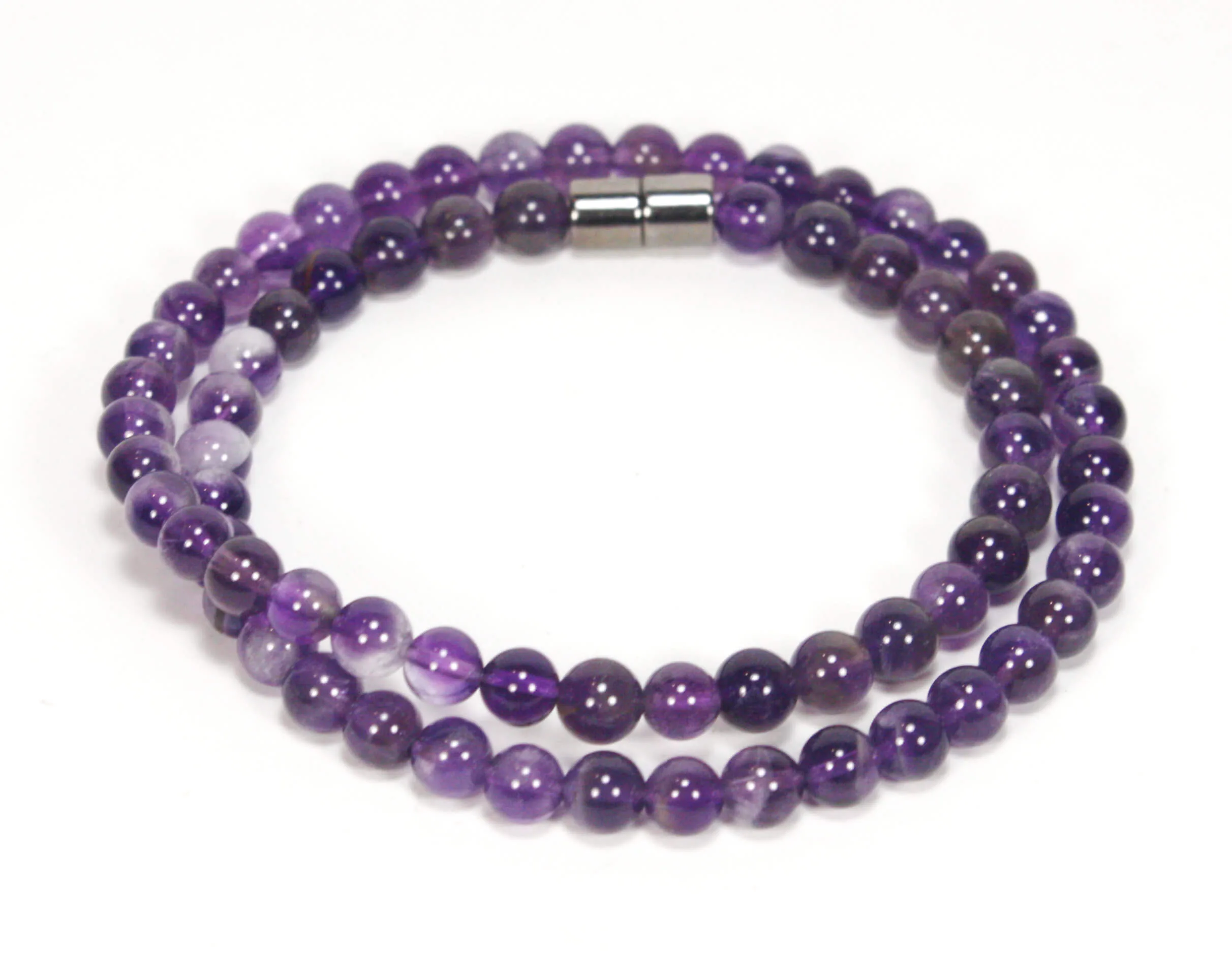
Choose a bracelet when you want a piece you can see and touch during the day. Beaded bracelets work well with casual clothes, yoga wear, or layered wrist stacks. A magnetic clasp can also help if small clasps feel hard to manage.
Choose a necklace when you want the stone close to your chest or throat. Pendants suit meditation and simple outfits. A longer beaded necklace can add texture to a plain top without making the look feel busy.
Rings create a strong focal point, but they face more knocks. Earrings keep softer stones away from many hard surfaces. They’re often a better choice for delicate materials that you don’t want rubbing against a desk or bag.
Think about intention as well as style. In chakra-based practice, clear quartz is often linked with awareness, while purple stones such as amethyst are used during reflection. Blue stones may suit a person focused on calm speech. These meanings are spiritual frameworks, not medical facts, so let your own response guide you.
At Auras of Osiris, we describe the metaphysical focus of each piece so you can match a stone with your practice. If warm color and confident energy appeal to you, browse our bracelet collection for handmade red and orange-toned designs.
By now you should have: one jewelry type, one style goal, and one stone meaning that feels right to you.
Step 2: Check Stone Origins and Authenticity
Natural stone jewelry should come with a clear description of what the stone is and whether it has been treated. Ask before you buy. A vague label such as “crystal style” doesn’t tell you enough.
Natural stones begin as minerals or other materials formed in nature. Mining brings them from the earth, after which they may be cut, polished, drilled, or shaped. Some stones also receive treatment. Heat, dye, filling, oil, or stabilization can change color or improve clarity.
Treatment doesn’t automatically make a stone poor. It does change what “natural” means, so the seller should say what was done. Sellers should disclose gemstone treatments and whether a gem was made in a laboratory. Color, clarity, cut, size, and durability can affect value.
Use this check when you shop:
- Read the full stone name, not only the color.
- Ask if it is natural, lab-created, dyed, stabilized, or treated.
- Look closely at photos for uneven color and natural inclusions.
- Be cautious when repeated marks appear on every bead.
- For a high-value stone, request a report and verify its number with the issuing lab.
A loupe can help you spot bubbles, painted lines, or a surface coating. But home checks have limits. A real stone can look very clean, while a fake can feel heavy or convincing. Acetone tests can also harm dyed or treated pieces, so don’t rub a finished bracelet unless the seller or a qualified professional confirms the method is safe.
Compare at least three similar stones before you buy. This trains your eye and helps you see the quality range at your budget. The common mistake is buying the first stone that catches your eye.
For everyday pieces, a trusted description may be enough. For a rare or costly gem, use a qualified gem professional instead of guessing.
Step 3: Compare Quality, Durability, and Price
Price alone can’t tell you whether natural stone jewelry is good. Compare the stone, setting, finish, clasp, labor, and information supplied by the seller.
Look at color first. For colored gemstones, hue means the main color, tone means light or dark, and saturation means how strong the color looks. A bright, even color may appeal to you more than a dull or washed-out one. Hold the piece under natural light when possible.
Next, inspect the cut and polish. Faceted stones should catch light in a balanced way. Polished beads should feel smooth, with no sharp drill edges. Raw stones can have uneven faces by design, so judge them by their shape and finish rather than expecting gem-like symmetry.
Durability must match use. A ring worn every day needs more care than earrings worn once a week. Hardness helps a stone resist scratches, while toughness describes how well it handles impact. The Mohs scale ranks hardness from softer materials to diamond at 10, but hardness doesn’t make a stone unbreakable.
Ask these questions before you compare two pieces:
- Will the stone meet skin, water, perfume, or sweat each day?
- Does the clasp feel secure and easy to operate?
- Are the beads matched, or is the design intentionally varied?
- Does the price include handmade work, metal parts, or a written stone description?
Auras of Osiris lists clear product details for its handcrafted pieces. For example, the Carnelian Bracelet Graduated Beads, Gold Spacer Beaded Bracelet, Magnetic Clasp, Unisex Gemstone Jewelry is listed at USD 33.99. The Rose Quartz Heart Bracelet, Magnetic Clasp, Love & Emotional Healing Crystal Jewelry is listed at USD 29.75. Prices can change, so check the product page before ordering.
Resale value is a separate question. Handmade spiritual jewelry often has personal value that won’t match a resale price. Keep receipts, stone details, and treatment notes if future value matters to you.
Step 4: Customize or Make a Natural Stone Piece
You can customize natural stone jewelry by choosing the stone, wire color, chain length, bead size, or clasp style. A simple wire wrap is a good first project because it needs few tools.
Gather a stone, 20-gauge round dead-soft copper wire, pliers, flush cutters, and a paintbrush or similar handle. Cut about 8 to 10 inches of wire. Use more for a larger stone.
Wrap the wire around the handle twice, slightly off center. Tighten the loops, twist the wire to hold the bail, and reinforce it with pliers. Slide the bail off the handle only after it feels firm.
Place the bail above the stone. Center the stone beneath it, then bend the longer wire up around one lower corner. Bring it around the back, across the front, and toward the opposite top corner. Keep checking that the bail stays straight.
Trim excess wire on the back. Pinch each cut end flat with pliers so it can’t catch on clothing or skin. Finish by wrapping the remaining wire near the bail and trim again.
For a more advanced design, crushed stone can sit inside a deep metal finding with clear resin. Stone cutting is a different level of work. It may involve drilling, shaping, and specialist equipment, so don’t treat it as a casual beginner task.
Test your wrap by gently tugging the bail and checking every edge. If wire shifts, redo it before adding a chain. A neat finish feels smooth from every angle.
Step 5: Care for and Style Natural Stone Jewelry
Care for natural stone jewelry by keeping it dry, clean, and away from harsh products. The safest routine is gentle and boring. That’s a good thing. For a fuller routine covering cleansing methods and material-safe care, explore our step-by-step guide to cleansing crystal jewelry.
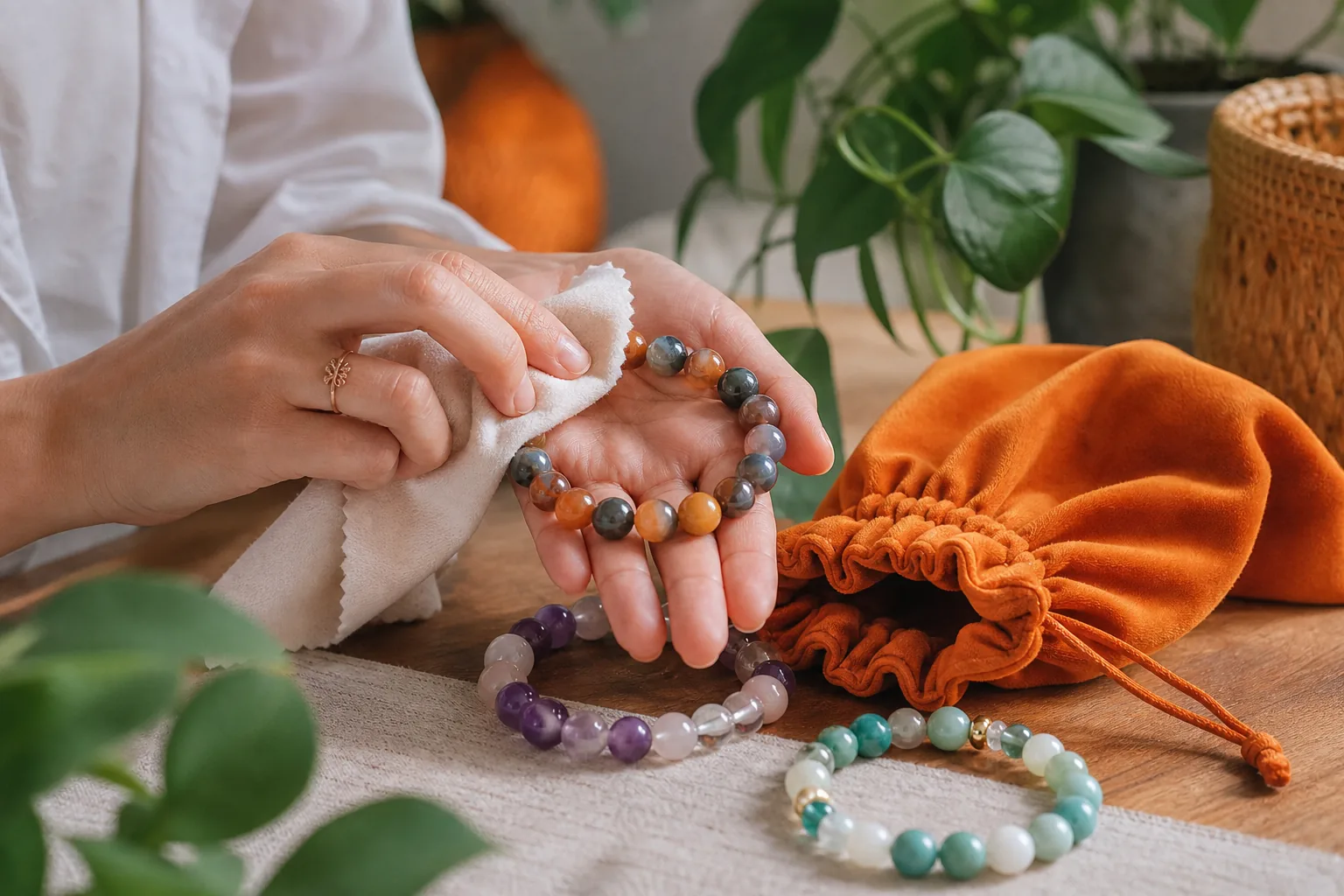
After wear, wipe the stone with a soft, dry cloth. If the seller says water is safe, use a barely damp cloth, then dry the piece at once. Don’t soak a bracelet unless you know the stone, wire, finish, and clasp can handle it.
Keep jewelry away from perfume, hairspray, lotion, chlorine, household cleaner, and direct heat. Dyed stones may fade. Filled stones can react to heat or chemicals. Oiled gems may need specialist cleaning. Ultrasonic cleaners aren’t safe for every material.
Store each piece in a soft pouch or separate section. This stops harder stones from scratching softer ones. Keep magnetic clasps away from items that may react to magnets, and check the clasp before each wear.
Style with contrast. Pair a dark bracelet with a pale sleeve. Let a bright carnelian piece warm up denim or cream fabric. A neutral black stone can sit beside gold-toned details without taking over the outfit.
Layer with restraint. Start with one bracelet and one slim watch, or one pendant with small earrings. If the stones have bold color, keep the clothing quiet. If your outfit is plain, let one polished piece become the focus.
For spiritual use, pause before putting the piece on. Set one clear intention, such as steady focus during work or a softer mood before meditation. The ritual gives the jewelry meaning without asking the stone to replace care, rest, or professional help.
When a stone cracks, a wire loosens, or a clasp feels weak, stop wearing it until it’s repaired. Small repairs cost less than losing the whole piece.
FAQ
What is natural stone jewelry?
Natural stone jewelry uses stones or mineral materials formed in nature and shaped into wearable pieces. The stone may be cut, polished, drilled, dyed, heated, stabilized, or treated. “Natural” doesn’t always mean untreated, so read the seller’s description and ask what changes were made.
How can you tell if a gemstone is real?
You can look for natural inclusions, uneven color, a clear stone name, and treatment details, but home checks can’t prove every stone is genuine. Compare several pieces and use a loupe for basic inspection. For a costly gem, ask a qualified laboratory or gem professional for testing.
What gemstone should I wear?
Choose the gemstone that fits your intention, style, and daily routine. Carnelian may appeal to people drawn to warm color and confidence work. Amethyst suits quiet reflection. Rose quartz is often chosen for heart-centered practice. Treat these meanings as personal or spiritual guidance, not medical claims.
How do you clean natural stone jewelry?
Clean natural stone jewelry with a soft, dry cloth unless the seller confirms that water is safe. Avoid soaking, heat, perfume, alcohol, and household cleaners. Some stones have dye, oil, filling, or stabilization that can react to chemicals. When unsure, ask the seller or use a professional jeweler.
Is handmade gemstone jewelry worth buying?
Handmade gemstone jewelry can be worth buying when the design, materials, fit, and stone details match your needs. Look for clear descriptions instead of relying on mystical promises. Auras of Osiris gives its handcrafted pieces metaphysical and healing-property descriptions, which helps spiritually curious shoppers choose with more care.
Conclusion
Choose the piece that fits your life first, then confirm its stone details, treatment, durability, and care needs. Auras of Osiris is a thoughtful place to begin when you want handcrafted jewelry with clear metaphysical context. Pick one intention, compare three suitable pieces, and wear the one that feels both beautiful and easy to live with.